🚚 Free Worldwide Shipping on All Orders!Shop Now

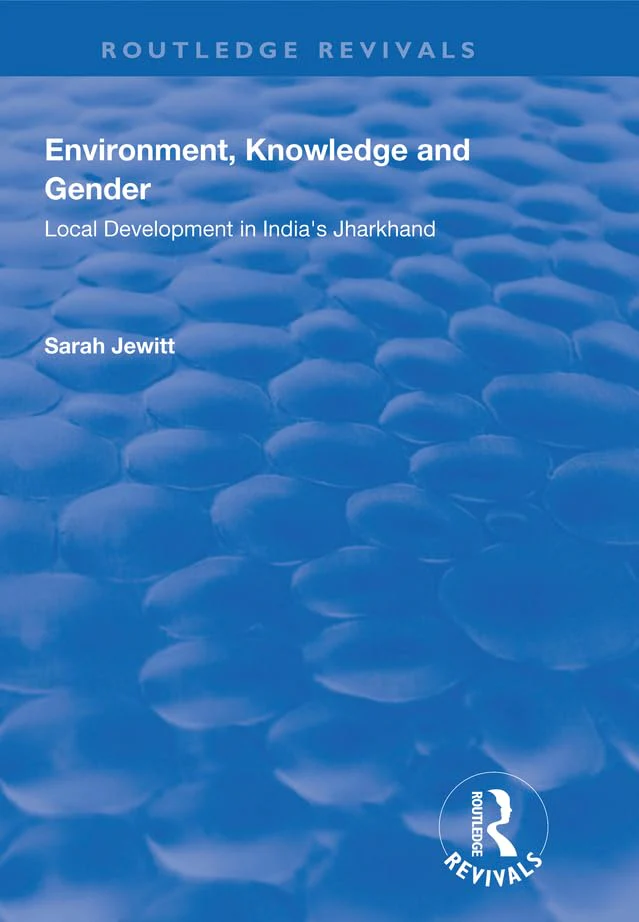
Environment, Knowledge and Gender
This title was first published in 2002: Tracing global shifts in development thinking through to national-level policy making in India and its local-scale implications, Sarah Jewitt investigates the practical value of radical populist and eco-feminist alternatives to more mainstream forms of development. Using detailed empirical data on forests and agriculture from two adivasi (tribal) villages in India, she takes a micro-political ecology approach to examine inter- and intra-community (especially gender) variations in environmental knowledge, resource management strategies and development aspirations. Critiquing the adoption of romanticized eco-feminist discourse in policymaking, Jewitt studies the Jharkhand region of Bihar, India, to determine women's contribution to environmental degradation and how the implementation of environmentally-oriented development initiatives affects their daily lives. She also examines the populist concern about the displacement of traditional agro-ecological practices by modern techniques, and illustrates the need to understand local people's socio-cultural beliefs and aspirations as well as their technical knowledge when seeking to promote more appropriate development.
This title was first published in 2002: Tracing global shifts in development thinking through to national-level policy making in India and its local-scale implications, Sarah Jewitt investigates the practical value of radical populist and eco-feminist alternatives to more mainstream forms of development. Using detailed empirical data on forests and agriculture from two adivasi (tribal) villages in India, she takes a micro-political ecology approach to examine inter- and intra-community (especially gender) variations in environmental knowledge, resource management strategies and development aspirations. Critiquing the adoption of romanticized eco-feminist discourse in policymaking, Jewitt studies the Jharkhand region of Bihar, India, to determine women's contribution to environmental degradation and how the implementation of environmentally-oriented development initiatives affects their daily lives. She also examines the populist concern about the displacement of traditional agro-ecological practices by modern techniques, and illustrates the need to understand local people's socio-cultural beliefs and aspirations as well as their technical knowledge when seeking to promote more appropriate development.
$68.43
Original: $228.09
-70%Environment, Knowledge and Gender—
$228.09
$68.43Description
This title was first published in 2002: Tracing global shifts in development thinking through to national-level policy making in India and its local-scale implications, Sarah Jewitt investigates the practical value of radical populist and eco-feminist alternatives to more mainstream forms of development. Using detailed empirical data on forests and agriculture from two adivasi (tribal) villages in India, she takes a micro-political ecology approach to examine inter- and intra-community (especially gender) variations in environmental knowledge, resource management strategies and development aspirations. Critiquing the adoption of romanticized eco-feminist discourse in policymaking, Jewitt studies the Jharkhand region of Bihar, India, to determine women's contribution to environmental degradation and how the implementation of environmentally-oriented development initiatives affects their daily lives. She also examines the populist concern about the displacement of traditional agro-ecological practices by modern techniques, and illustrates the need to understand local people's socio-cultural beliefs and aspirations as well as their technical knowledge when seeking to promote more appropriate development.