🚚 Free Worldwide Shipping on All Orders!Shop Now

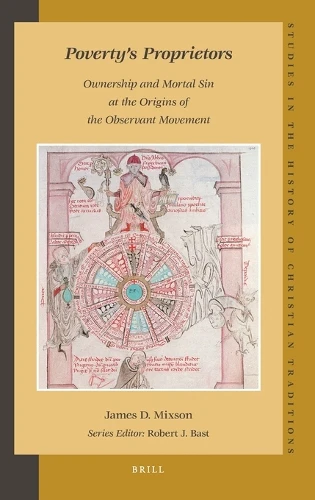
Poverty's Proprietors: Ownership and Mortal Sin at the Origins of the Observant Movement
Focusing on the theme of property and community, this study offers a new account of the origins of fifteenth-century Observant reform in the monasteries and canonries of the southern Empire. Through close readings of unpublished texts, it traces how ideas about reformed community emerged, both beyond and within the religious orders, in the era of the Council of Constance. Focusing on reform among monks and canons in Bavaria and Austria to 1450, it then shows how those ideas were applied in practice, through reforming visitation and through a devotional culture steeped in the a oenew pietya of the day. These considerations allow the Observant Movement to offer fresh perspectives on the history religious community, reform, and the church in the fifteenth century.
Focusing on the theme of property and community, this study offers a new account of the origins of fifteenth-century Observant reform in the monasteries and canonries of the southern Empire. Through close readings of unpublished texts, it traces how ideas about reformed community emerged, both beyond and within the religious orders, in the era of the Council of Constance. Focusing on reform among monks and canons in Bavaria and Austria to 1450, it then shows how those ideas were applied in practice, through reforming visitation and through a devotional culture steeped in the a oenew pietya of the day. These considerations allow the Observant Movement to offer fresh perspectives on the history religious community, reform, and the church in the fifteenth century.
$215.09
Poverty's Proprietors: Ownership and Mortal Sin at the Origins of the Observant Movement—
$215.09
Description
Focusing on the theme of property and community, this study offers a new account of the origins of fifteenth-century Observant reform in the monasteries and canonries of the southern Empire. Through close readings of unpublished texts, it traces how ideas about reformed community emerged, both beyond and within the religious orders, in the era of the Council of Constance. Focusing on reform among monks and canons in Bavaria and Austria to 1450, it then shows how those ideas were applied in practice, through reforming visitation and through a devotional culture steeped in the a oenew pietya of the day. These considerations allow the Observant Movement to offer fresh perspectives on the history religious community, reform, and the church in the fifteenth century.