🚚 Free Worldwide Shipping on All Orders!Shop Now

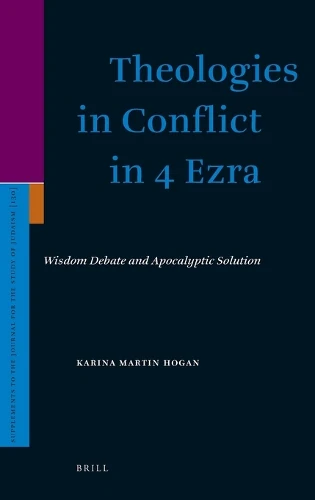
Theologies in Conflict in 4 Ezra
Recent scholarship on 4 Ezra has taken two divergent approaches, the first reading the dialogues between Ezra and Uriel as a reflection of theological debates in the author's time, and the second focusing on the psychological development of the protagonist. Combining the two approaches, this book offers a new interpretation of the dialogues as a literary representation of a debate between covenantal and eschatological wisdom, two branches of Jewish wisdom that emerged in the late Second Temple period. The inconclusive quality of the dialogues indicates the author's dissatisfaction with Uriel's attempt at a rational theodicy. Ezra's subsequent transformation points to the symbolic visions as the locus of the author's apocalyptic solution to the intractable theological problems raised in the dialogues.
Recent scholarship on 4 Ezra has taken two divergent approaches, the first reading the dialogues between Ezra and Uriel as a reflection of theological debates in the author's time, and the second focusing on the psychological development of the protagonist. Combining the two approaches, this book offers a new interpretation of the dialogues as a literary representation of a debate between covenantal and eschatological wisdom, two branches of Jewish wisdom that emerged in the late Second Temple period. The inconclusive quality of the dialogues indicates the author's dissatisfaction with Uriel's attempt at a rational theodicy. Ezra's subsequent transformation points to the symbolic visions as the locus of the author's apocalyptic solution to the intractable theological problems raised in the dialogues.
$215.19
Theologies in Conflict in 4 Ezra—
$215.19
Description
Recent scholarship on 4 Ezra has taken two divergent approaches, the first reading the dialogues between Ezra and Uriel as a reflection of theological debates in the author's time, and the second focusing on the psychological development of the protagonist. Combining the two approaches, this book offers a new interpretation of the dialogues as a literary representation of a debate between covenantal and eschatological wisdom, two branches of Jewish wisdom that emerged in the late Second Temple period. The inconclusive quality of the dialogues indicates the author's dissatisfaction with Uriel's attempt at a rational theodicy. Ezra's subsequent transformation points to the symbolic visions as the locus of the author's apocalyptic solution to the intractable theological problems raised in the dialogues.